Kokong Festival Lets the Åland Landscape Reframe Electronic Music

The strongest electronic festivals are not necessarily the ones with the largest stages. Sometimes identity comes from restriction: a particular room, a remote location and a programme that trusts its audience enough to move between listening and dancing without explaining every transition. Kokong Festival belongs to that second category. Returning on July 31 and August 1, 2026, the interdisciplinary gathering takes over the Stallhagen Dome in Godby, Åland, with a programme centred on experimental electronic and electroacoustic music.
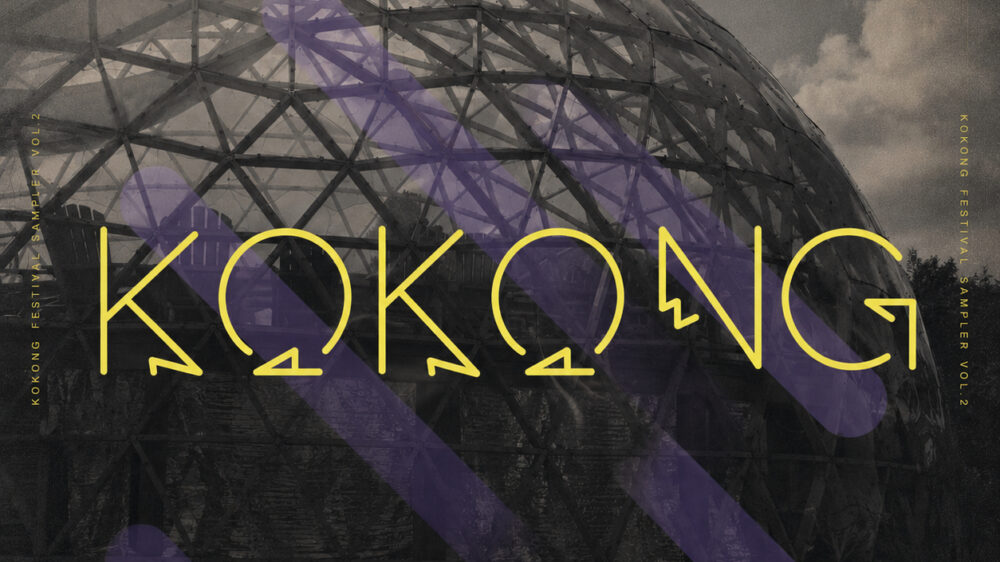
The transparent geodesic venue immediately changes the relationship between performance and environment. During daylight hours, the wooden frame, surrounding landscape and technical equipment remain visible, removing the artificial darkness that normally separates electronic music from the outside world. As the evening develops, lighting, haze and low frequencies can gradually redefine the same structure, turning an exposed architectural space into a concentrated dancefloor.
This progression is important because Kokong does not present ambient music, sound art and club rhythms as isolated disciplines. The official programme moves between electronic composition, performance, techno and experimental practice, connecting international artists with creators from Åland and the surrounding Nordic scene. The festival’s identity is therefore built through contrast: acoustic and digital processes, natural and artificial light, private concentration and collective movement.
The 2026 programme includes Nadia Struiwigh, Samuli Kemppi, Daniel Savio, DJ Aleksi, Mika Snickars, Svenska Discokyrkan, Simone Ghetti, Dreamloader, Amanda Blomqvist, Gabriel Ferntoft, Fantasy Salad, Yard One, Lauren Sarah Hayes, ÅSMV, Kustal, Axel2006, Urgrund, Havsmörker, Alpha, Isrich, Fjäril, Nils Bland, Sampo Sarkola and Johan Grönlund. It is a broad selection, but not an unfocused one: each name contributes to a programme concerned with atmosphere, experimentation and the physical possibilities of sound.
Two premieres from KOKONG Festival Sampler Vol. 2 have already extended that curatorial approach beyond the event itself. Through Vicious Magazine, Samuli Kemppi presented “Kokong”, a hypnotic techno production shaped by dynamic percussion, substantial low frequencies and synthesizers that continually deform without breaking the track’s central tension. Instead of chasing an immediate peak, the Finnish producer allows small changes in texture and spatial pressure to drive the narrative forward.
The second featured premiere, Yard One’s “Cosmic Tuesday”, introduces another part of the sampler and strengthens the connection between the festival and the music being created around it. The track appears alongside contributions from artists including Tryst, Samuli Kemppi, Havsmörker, Erase and Simone Ghetti, presenting the compilation as more than a promotional attachment: it becomes an advance document of the listening culture that Kokong wants to create.
This is where the sampler and the festival begin to mirror one another. “Kokong” represents a dense, club-oriented form of hypnosis, while “Cosmic Tuesday” opens another entrance into the compilation’s wider electronic terrain. Together, the premieres suggest that the festival is less interested in imposing one signature sound than in creating relationships between different forms of repetition, space and movement.
The cultural structure behind the event is equally relevant. Ström Cultural Association was established to develop Kokong Festival while generating artistic opportunities and collaborations locally and internationally. Its purpose includes supporting experimental electronic and electroacoustic music and bringing artists and listeners together through diversity, tolerance and shared activity. The festival is therefore not an external brand temporarily using Åland as scenery; it is connected to a longer-term effort to strengthen the island’s electronic culture.
That local foundation gives the event a different kind of internationalism. Visiting artists enter a programme that already has its own geography, architecture and community. The island is not reduced to picturesque branding, and the dome is not merely a photogenic stage. Both become active parts of the experience, shaping how long a performance can breathe, how close the audience stands to the artist and how the transition from daylight to darkness changes the perception of sound.
Practical arrangements maintain the festival’s intimate character. One-day and two-day tickets are available through Resident Advisor, while bus transport is planned between Mariehamn and the festival site around the opening and closing hours on both days. Visitors travelling from outside Åland can reach the islands by ferry through Sweden or Finland. The main festival area is wheelchair accessible, food is available through the restaurant at Stallhagen and drinks will be served from several bars.
Kokong Festival does not promise escape through spectacle. It offers something more difficult to reproduce: a temporary environment where architecture, landscape and programming remain inseparable. Inside the Stallhagen Dome, experimental music is not treated as a distant intellectual exercise, and techno is not reduced to impact alone. Both become ways of altering attention, space and collective behaviour.
The premieres from Samuli Kemppi and Yard One reinforce that philosophy before the festival begins. They are not simply tracks placed beside an event announcement; they are early fragments of the world Kokong is building—one where detailed listening and physical release belong to the same continuum.
Festival information
Dates: July 31–August 1, 2026
Venue: Stallhagen Dome, Getavägen 196, 22410 Godby, Åland
Minimum age: 18+
Official website: https://www.kokong.ax/
Tickets: https://ra.co/events/2446708
Instagram: https://www.instagram.com/kokongfestival/
Contact: festival@kokong.ax