In Conversation with Claudio Capo
 by voixpr November 9, 2026 · Features
Tanzgemeinschaft, community, curation and the reality of running an independent electronic music label
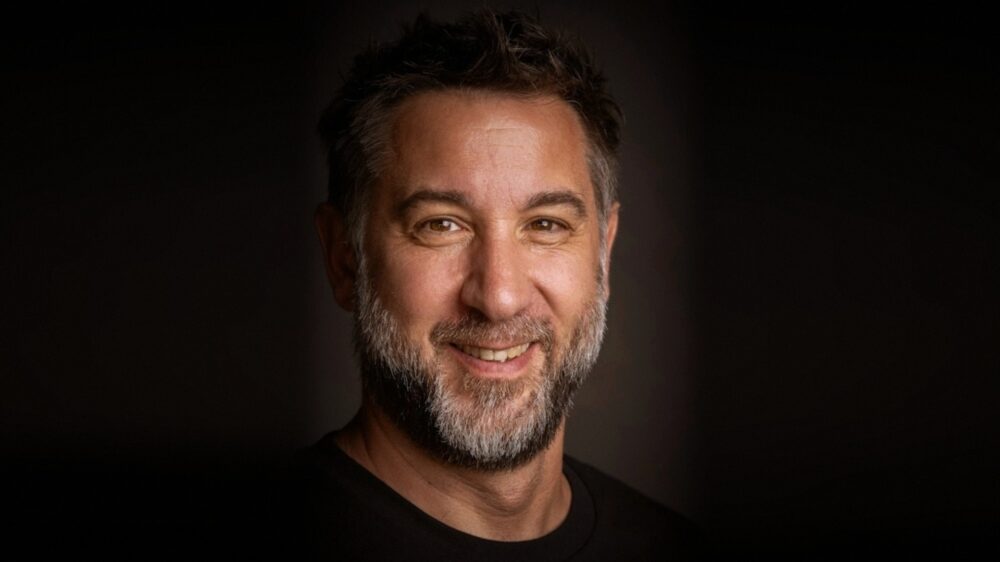
Tanzgemeinschaft did not start as a traditional record label. It grew out of a long-standing passion for underground electronic music, alternative spaces and the idea of bringing people together through dance music. In this interview, Claudio Capo reflects on the roots of the project, the evolution of the label, the challenges of running everything largely on his own, and the importance of real-life community in a digital-first music world.
Origins & Identity
Tanzgemeinschaft has grown into more than just a record label. When you look back, what was the original spark behind starting it?
Tanzgemeinschaft started as a concept more than 25 years ago. Before it became a label, it was about bringing people together around underground electronic music in unusual places: caves, bunkers, haystacks, old mining buildings… locations far away from the traditional club environment.
Back then, it was called Four In Trance, and we were also involved in one of the very first DJ schools in Belgium. The idea was never to copy club culture. The focus was always underground electronic music and creating alternative spaces where people could gather, dance and connect.
I lived close to the German border in Belgium, and that’s where the name Tanzgemeinschaft comes from: a dance community, but with that slightly German touch that reflected where I came from geographically and culturally.
The name Tanzgemeinschaft suggests community through dance. Does that idea still define the label today?
Definitely. Tanzgemeinschaft is still built around the idea of community, but today that community is mainly shaped by the artists who release on the label. It feels like a large family of artists who come and go, each bringing their own story, sound and emotion.
The label is not just about putting music out. It’s about carrying a shared idea forward: releasing music that supports our mission of evoking emotions. That has always been at the heart of Tanzgemeinschaft. Whether it’s melodic, progressive, deeper or more driving, the music needs to make people feel something.
How would you describe the musical identity of Tanzgemeinschaft to someone discovering it for the first time?
I would tell people to go through our playlists and listen to how the label has evolved over the years. In the beginning, Tanzgemeinschaft had a broader electronic focus, but over time the sound became more defined. Today, the label mainly focuses on melodic house & techno and progressive house.
That focus helped us understand which music truly belongs on Tanzgemeinschaft, and which sounds needed their own space. So we launched two other labels: Under The Trees, with a focus on Indie Dance and Nu Disco, and Warn The Neighbors, which is more about deep, organic and Afro house.
Tanzgemeinschaft today stands for emotional, melodic and progressive electronic music. Tracks need to work musically, but they also need to carry feeling. That emotional connection remains the most important thread across the label.
Curation, Artists & Label Philosophy
Tanzgemeinschaft has released music across melodic house & techno and progressive house. What do you listen for when deciding whether a track fits the label?
I turn down quite a lot of tracks, even from artists who have released on the label before. That might sound strict, but it’s important for keeping the identity of Tanzgemeinschaft intact. A track has to give us that feeling that it belongs on the label.
Our mission is evoking emotions, and although that means something different for every listener, we want to release music that feels close to us. It needs to connect on a deeper level. It doesn’t always have to be big or dramatic, but it has to carry a certain emotional weight, a certain atmosphere, or a story that makes sense within the world of Tanzgemeinschaft.
For me, Tanzgemeinschaft stands for depth over hype in electronic music. We’re a curator of soul, not a trend-chaser. We dig for deep, melodic and organic records made with real craft, and we try to give them the attention they deserve.
That feeling is more important than names, trends, or release history. If the music doesn’t fit, it doesn’t fit.
You’ve worked with a wide range of artists over the years. What makes an artist stand out to you beyond the music itself?
Passion is the first thing. You can feel when an artist truly lives for the music, and you can also feel when someone is just releasing tracks because they think they have to keep feeding the system. For me, that difference matters.
I’m drawn to artists who release with intention. Not music for the sake of putting music out, but music that says something about who they are. That doesn’t mean every release needs to be overly serious, but there has to be care, identity and belief behind it.
I also think artists need to work on building a real connection with listeners. Even if you stay in your room forever, make people love your music. Make it travel. Make it spread. A fan base doesn’t always start with big numbers; it starts with people genuinely caring about what you do.
The label has passed an important milestone with more than 100 releases. How has your approach to A&R and curation changed since the early days?
What many people don’t know is that Tanzgemeinschaft is, in many ways, a one-man operation. It is run by me, Claudio Capo. Besides the labels and events, there is also Tanzgemeinschaft Magazine, where I work closely with some great PR people who help with content. But the labels and events themselves are handled by one person.
That reality has definitely shaped my approach to A&R and curation. In the early days, we released around one release per month. At some point, that became three per month, then two, then even weekly. Over time, I had to find a healthier and more realistic balance.
Today, the rhythm is usually one release every two to three weeks. That gives each release more space and attention, while keeping the workload manageable. I don’t want Tanzgemeinschaft to become a machine that pushes out music just to stay visible. The goal is still to give every release the care it deserves.
Do you see Tanzgemeinschaft mainly as a platform for established artists, emerging talent, or a bridge between both?
The original idea was always to give young and emerging talent a platform. In the beginning, that happened mainly through the online magazine: guest mixes, interviews, and later also reviews and premieres.
Over time, I noticed that reviews and premieres became very time-consuming, so that part still exists, but today it’s mostly handled through the PR agencies I work with. The heart of the idea remains the same though: offering visibility to artists who deserve to be heard.
Adding the label felt like a natural next step. It gave me a way to help those artists not only get featured, but also actually release music through a record label. For me, Tanzgemeinschaft was never about chasing big names. It was about creating a serious platform for artists who are still building their story and need people to believe in their music.
The Label Family, Magazine & Events
Alongside Tanzgemeinschaft, you also run Under The Trees and Warn The Neighbors. Why was it important to create separate label identities instead of releasing everything under one name?
The reason was simple: I wanted to keep the focus clear for each label. Tanzgemeinschaft had evolved more toward melodic house & techno and progressive house, and I didn’t want to dilute that identity by releasing everything under the same name.
So I created separate spaces for different sounds. Under The Trees is there for Indie Dance and Nu Disco, while Warn The Neighbors focuses on deep, organic and Afro house.
It wasn’t a complicated strategic decision. It was mainly about respecting the genres and giving each sound its own home.
With Tanzgemeinschaft, you’ve always worked between label, magazine and events. How do those different parts strengthen each other?
I think the combination of label, magazine and events is a strong strategic setup. Having an online magazine gives me a platform to support and push my own releases, but also to give context around the artists and the music. It allows Tanzgemeinschaft to be more than just a catalogue of tracks.
The events add another layer to that. I like to keep them small and focused, but they give me a space to actually play music from the label and bring it to people in a physical setting. That way, the releases don’t only live online. They can be heard, felt and promoted in a real environment.
For me, those parts strengthen each other: the magazine tells the story, the label releases the music, and the events create the connection.
Challenges, Artist Support & Independent Reality
Running an independent label today means dealing with streaming, promo, social media, artwork, artists, playlists and constant visibility. What has been the biggest challenge for you as a label owner?
If I’m really honest, the biggest challenge today is social media. And I think a lot of artists and label owners feel the same. There is so much noise out there that it becomes harder and harder to find an audience that actually stops scrolling and gives attention to the art you’re putting out.
It’s not just about getting a quick heart through a double tap. What matters is getting people to genuinely read what has been written, listen to the music, and understand the story behind a release. That kind of attention is much harder to earn today.
Another challenge is helping artists understand the marketing and promo side. I often feel there is a real need for guidance there. A simple repost will never be enough. As I always tell artists: you are the ambassador of your own music. You need to tell the story behind it.
That’s also why I created a guide on Tanzgemeinschaft called Electronic Music Promotion: 10 Essential Strategies for DJs & Producers: https://www.tanzgemeinschaft.com/electronic-music-promotion-10-essential-strategies-for-djs-producers-28338. It’s meant to help artists think beyond just uploading a track and posting once. Promotion is a process, and artists need to understand how to build visibility step by step.
I also started The System, a podcast for small indie labels facing the same struggles:
Because the reality is that a lot of us are dealing with the same questions: how do we create attention, how do we support artists, and how do we keep going without burning out?
The label is there to promote the release in its own way and to support the artist as much as possible, but the strongest promotion happens when the artist also takes ownership of the story and communicates it with honesty and consistency.
Looking at the electronic music scene today, what do you think artists often underestimate when releasing music?
What many artists underestimate is that releasing music alone doesn’t automatically create opportunities. A lot of artists on my label want to be a DJ and producer, and of course they want to play more shows. But if you want to play more, you need people listening. You need fans. You need some kind of audience around you.
You can be a fantastic DJ, but a random booker will not book you just because you say you’re good. If they see 300 monthly listeners on Spotify or 150 SoundCloud followers, it becomes difficult for them to understand the demand around you. That may sound hard, but it’s the reality.
So I tell artists: if you want to play more, work on making those numbers grow. Build your fan base. Tell your story. Make people care. And if the bookings don’t come, start organising your own event. Start small and grow over time.
None of this happens overnight. It takes effort, consistency and perseverance. Talent matters, but the artists who keep going, keep building and keep connecting usually create the most opportunities for themselves.
Community, Balance & The Future
What role do events still play in the Tanzgemeinschaft story, especially considering the project originally started around people coming together to dance?
Events are still important to the Tanzgemeinschaft story, because the whole idea originally started with people coming together around music. That physical connection matters. Music feels different when you experience it in a room with people who are really listening and dancing.
But because I run everything alone, I also have to be realistic. Organising events takes a lot of time and energy, so I don’t want to overdo it. At the moment, I focus on around three to four events a year, alongside the Tanzgemeinschaft label showcase during Amsterdam Dance Event.
I like to keep those events small, usually around 150 to 200 people. That size feels right for me. It creates a crowd of music-loving people where the atmosphere is more personal and where the music can really breathe. I’m not interested in making the events bigger just for the sake of it. It has to feel right.
How do you personally balance passion with the practical side of running labels, a magazine, events and promotion almost entirely on your own?
That balance is precarious, to be honest. There are moments when it feels overwhelming, because it is a lot to carry: the labels, the magazine, events, promotion, planning, artists, content, and then everything that happens behind the scenes.
Friends sometimes tell me I simply have too much energy and that it needs to come out somewhere. Maybe they’re right, haha. But doing all of this next to a daytime job as a project manager in the creative industry is intense. It takes a lot of discipline, structure and persistence.
I do think the project manager side helps. I’m used to planning, organising, following up, keeping overview and pushing things forward. Without that mindset, it would probably be impossible to keep everything moving. But the passion has to be there too. If this was only work, I wouldn’t be able to sustain it.
What still gives you the biggest satisfaction after all these years: discovering new music, helping artists release, seeing people dance, or building the wider story around Tanzgemeinschaft?
Discovering new music still gives me the biggest satisfaction. That moment when you hear a track and immediately feel it belongs somewhere is still very special.
Bringing people together to dance is another big part of it. That has always been in the DNA of Tanzgemeinschaft. Some friends even jokingly call me the music police because they ask me for advice on what to listen to.
And yes, building a wider story around Tanzgemeinschaft is also on the table. It feels like there is still more to shape around the label, the magazine and the events.
Looking ahead, what do you want Tanzgemeinschaft to stand for in the coming years — musically, culturally and as a community?
I’d like to grow the community part of Tanzgemeinschaft, but not in the typical “online community” sense. For me, real community happens when people go out, discover music, dance together and connect in real life.
That’s what community is about: talking, not bragging. Caring, sharing, loving. Music has the power to unite people and evoke emotions, and that’s still the core of Tanzgemeinschaft.
In the coming years, I’d love Tanzgemeinschaft to stand even more for that: a place where people discover music with depth, where artists feel supported, and where people come together because the music truly means something to them. Let’s do this together.