
JD Fairlight: “It was my memories of each place that dictated the style of the track”

For JD Fairlight, STOCKHOLM began with a journey and an unexpected impression: the quiet of an airport, the calm of public transport and the feeling of moving through a city without stress. Those memories became the starting point for an album whose tracks take their names from the places he visited.
Released through SKYLINE ARCHIVE, the label founded by his longtime friend Phil Rodriguez, the project brings together personal recollections, synthesizer experimentation and a sequence shaped by the order in which the music was created. We spoke with JD Fairlight about the experiences behind the record, his studio tools and the relationship that brought the album to the label.
STOCKHOLM feels less like a conventional collection of tracks and more like an emotional cartography of the city. What was the first memory, image or sound that made you realise this idea needed to become a full album?
JD Fairlight: I had planned a trip to see Tove Lo play at a venue in Stockholm. When I arrived at Arlanda Airport, what struck me was the quiet: I could hear no announcements, just people’s footsteps. I found that same calm on the train and in the underground, in the way people behaved. There was no sense of stress. It felt like a good place to live.
After composing “Stockholm’s Theme”, I thought one track was not enough. This city and this country have given us so much musically: ABBA, of course, but also electronic artists such as Swedish House Mafia, Alesso, Avicii and Eric Prydz. I felt there was more to explore.
I had also been using Clavia Nord synthesizers for years, and they are made in Stockholm. The idea grew from there. Rather than giving the tracks English titles, I decided to name them after places in the city that I had visited.
The record is built around twelve locations and perspectives. How did you translate architecture, weather, movement and personal memory into rhythm, harmony and texture without making the concept too literal?
JD Fairlight: I would simply give a track its name, and my memories of the place would come back to me. A melody, a rhythm, an electronic atmosphere would emerge, and the scene was set. I approached every track on the album that way.
I enjoy experimenting and searching for sounds and textures. I start with a limited palette, then gradually bring in other plugins and synthesizers.
There is a compelling dialogue throughout the album between club functionality and reflective listening. When producing it, were you imagining dance floors, headphones, long journeys through the city — or all of these at once?
JD Fairlight: Actually, I wasn’t thinking in terms of clubs or dance floors. I make music quite naturally, combining different kinds of synthesizers and different technologies. When I was younger, I also studied music theory and harmony at a music school.
For this album, it was my memories of each place that dictated the style of the track.
Could you take us inside the studio for this project? Which pieces of hardware, software or recording techniques shaped the album most strongly, and where did chance or imperfection enter the process?
JD Fairlight: My computer setup was an Apple Mac Pro running Logic Pro, with a DigiRack 3. I also used TC PowerCore and various plugins. The main synthesizers were a Clavia Nord Lead 2X and a Nord Lead 4. Depending on the track, I would add an ARP Odyssey or other synthesizers.
I collect synthesizers, and I’m starting to build up a collection of some lovely instruments.
Tracks such as “Gamla Stan’s Theme”, “Vasastan’s Theme” and “Solna’s Theme” approach the city from noticeably different angles. Which track changed the most from its original sketch, and which one came closest to arriving fully formed?
JD Fairlight: Gamla Stan is the old town, with the Royal Palace and the Nobel Museum. That track starts out with an electro feel before turning into something more danceable.
“Vasastan’s Theme” is very rhythmic. In my mind, it also connects with the Vasa, the warship that sank in Stockholm and now has a museum devoted to it.
Solna evoked the commercial life of the suburbs for me. IKEA is another part of my memories of the shops around Stockholm. Those are personal impressions from the trip that I translated into music.
This is the first album released by SKYLINE ARCHIVE. What did Phil Rodriguez understand about the project that made the label feel like the right home for STOCKHOLM?
JD Fairlight: Phil and I have known each other for a very long time; he is my best friend. We founded Global Music Group together back then and put out several maxi-singles, with me taking on different roles from one release to the next. Anyone who would like to know more about that history can have a look at the website.
When Phil told me about his new project, his new tracks and a label called SKYLINE ARCHIVE, it felt completely natural to offer him this album. I later became part of the organisation myself.
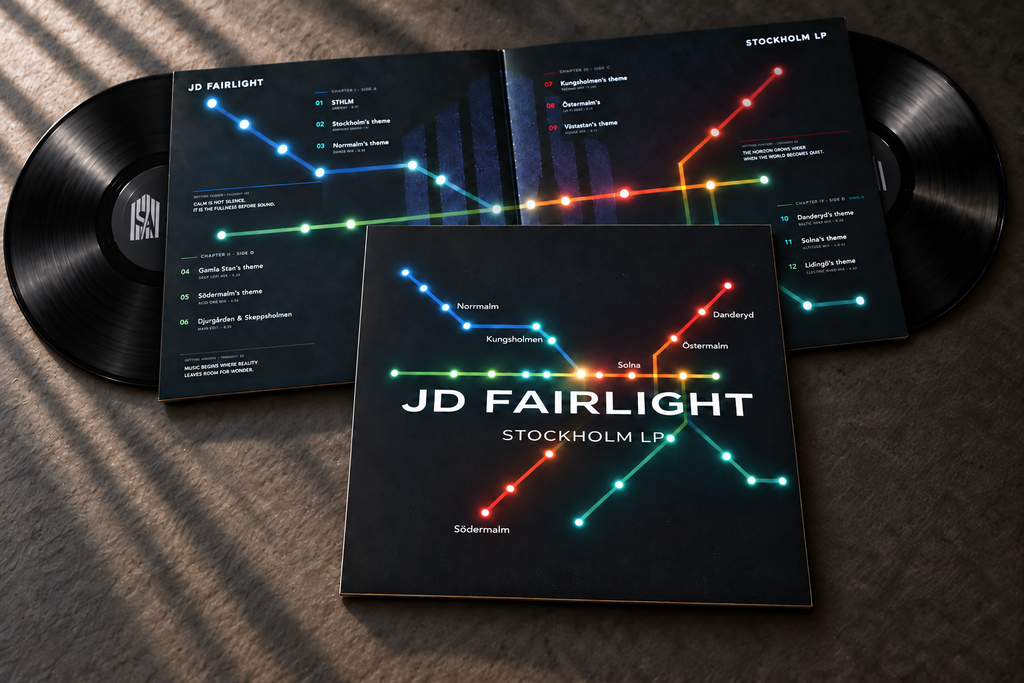
The album is being given a physical life on vinyl. How involved were you in the mastering, sequencing and visual presentation, and did the limitations of the format influence the final shape of the record?
JD Fairlight: The track order has not changed. The pieces appear in the chronological order in which they were composed and recorded, apart from “STHLM”, the introduction, which was recorded last.
I was looking for an original way to open the album. At first, “Stockholm’s Theme” was going to be the opening track, but on another trip to the city I had the idea of recording the underground — the T-bana — on my iPhone.
For the mastering, I put my trust entirely in Phil. He gave Streaky exactly the right direction.
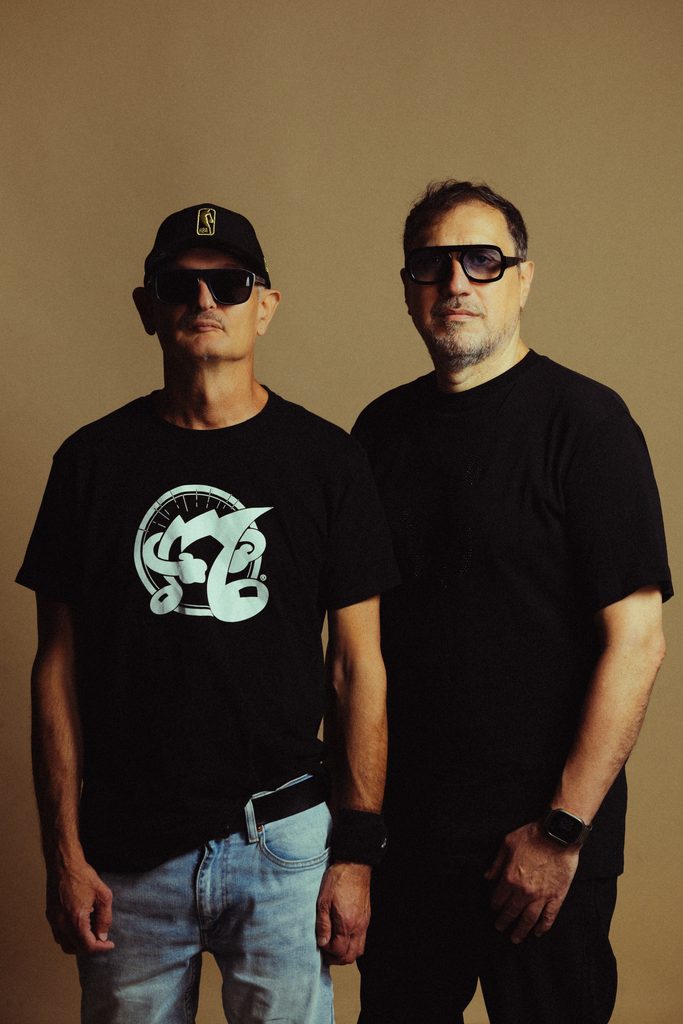
DBH Music is handling the physical distribution. What does working with an established vinyl distributor add to an independent release, and where should listeners expect to find the record?
JD Fairlight: Phil has known the record industry inside out for years. He carefully explored several options for distribution, and I have complete confidence in his choice of DBH Music.
Phil Rodriguez (SKYLINE ARCHIVE): Distributing vinyl has become complex these days; it was much easier in the 1990s and early 2000s. The connection with Alex at DBH Music in Germany developed naturally. He immediately connected with our website and found it very professional.
We eventually signed an exclusive worldwide distribution agreement covering the label’s entire catalogue, including digital releases. We will now need to transfer our full catalogue to DBH.
I have complete confidence in their expertise. They distribute major techno artists, and the partnership should help us reach a wide range of shops across Europe and around the world. We expect to place particular emphasis on Germany, Spain, England, Italy and the Benelux. I also hope to develop our presence in countries where the label’s music has been warmly received, such as Mexico, Brazil and the United States, where our tracks are already receiving regular radio airplay.
Vinyl asks the listener to slow down, turn the record over and experience a deliberate sequence. What do you hope someone discovers in STOCKHOLM through that ritual that might be missed in a quick digital listen?
JD Fairlight: It is a concept album, so I would encourage people to listen to it in the order I chose. It tells the story of my visit to Stockholm, which I put into music through my own ideas and sounds.
I would also recommend listening on a good-sized speaker system so you can hear its full depth.
Now that the album is out in the world, what would you like its afterlife to be — in DJ sets, live performance, remixes or perhaps another chapter connected to a different place?
JD Fairlight: I haven’t really thought about that yet; time will tell. I do have quite a few new tracks that Phil already knows. What I can say is that my style is becoming more defined and continuing to develop.
We’re waiting to see how people respond, and STOCKHOLM’s story is only just beginning… To be continued.
Discover SKYLINE ARCHIVE:
https://www.skylinearchive.net/
Listen to the label’s premiere playlist:
https://soundcloud.com/marc-henry/sets/skyline-archive-premieres
Photography: © Loïc — Idole Studio